Pea and Wheat Protein Texture Troubleshooting with Enzymes
Pea and wheat protein systems can deliver convincing bite, fiber definition, and savory juiciness—but they rarely behave as single-variable formulations. Texture failures often emerge from the interaction of hydration rate, shear history, heat input, fat phase behavior, fiber loading, salt system, and protein blend ratio.
Enzymefusion supports plant-based meat manufacturers using enzymes as one precise lever inside that broader texture system. We help R&D, process, and scale-up teams evaluate where enzymatic modification can improve structure formation, reduce brittleness, manage stickiness, or tighten batch-to-batch performance without treating enzymes as a shortcut around process fundamentals.
If you need an enzyme supplier for plant based meat manufacturing that can speak to extrusion realities, mixing order, holding time, and finished-product texture—not just ingredient labels—Enzymefusion is built for that conversation.
Where pea and wheat systems typically break down
Pea protein and wheat gluten bring complementary functionality, but their interaction can be difficult to control. Pea protein contributes water binding, density, and particulate body. Wheat gluten contributes elasticity, extensibility, and fibrous network potential. The wrong balance can create texture that looks aligned in process but fails during cooling, slicing, cooking, or reheating.
Common factory-side issues include:
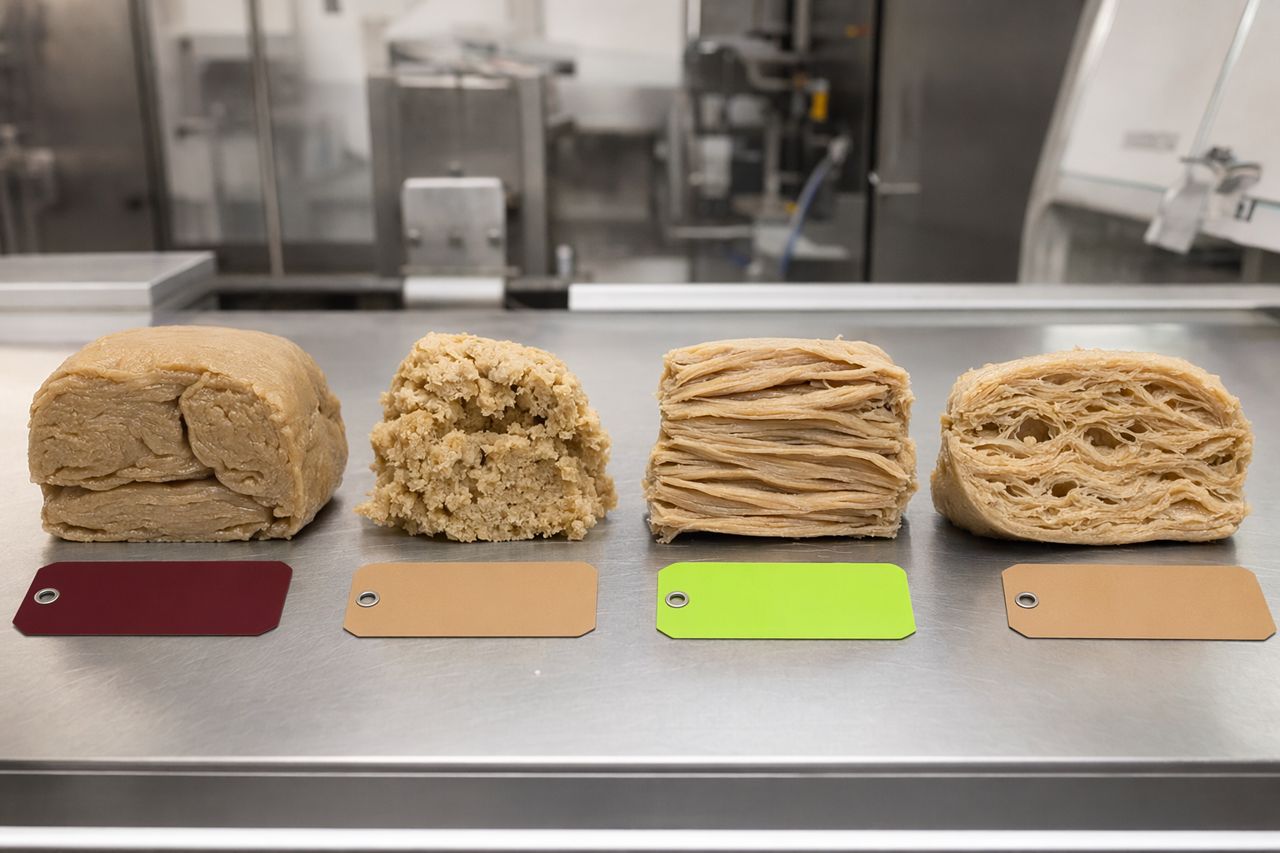
- Rubbery bite: Excess elastic recovery, over-developed gluten character, or insufficient disruption during shear.
- Dry or chalky chew: Incomplete hydration, over-aggregation, low fat integration, or protein particles that remain texturally exposed.
- Weak fiber definition: Poor protein unfolding, insufficient alignment, inadequate thermal setting, or enzyme timing that misses the structure-forming window.
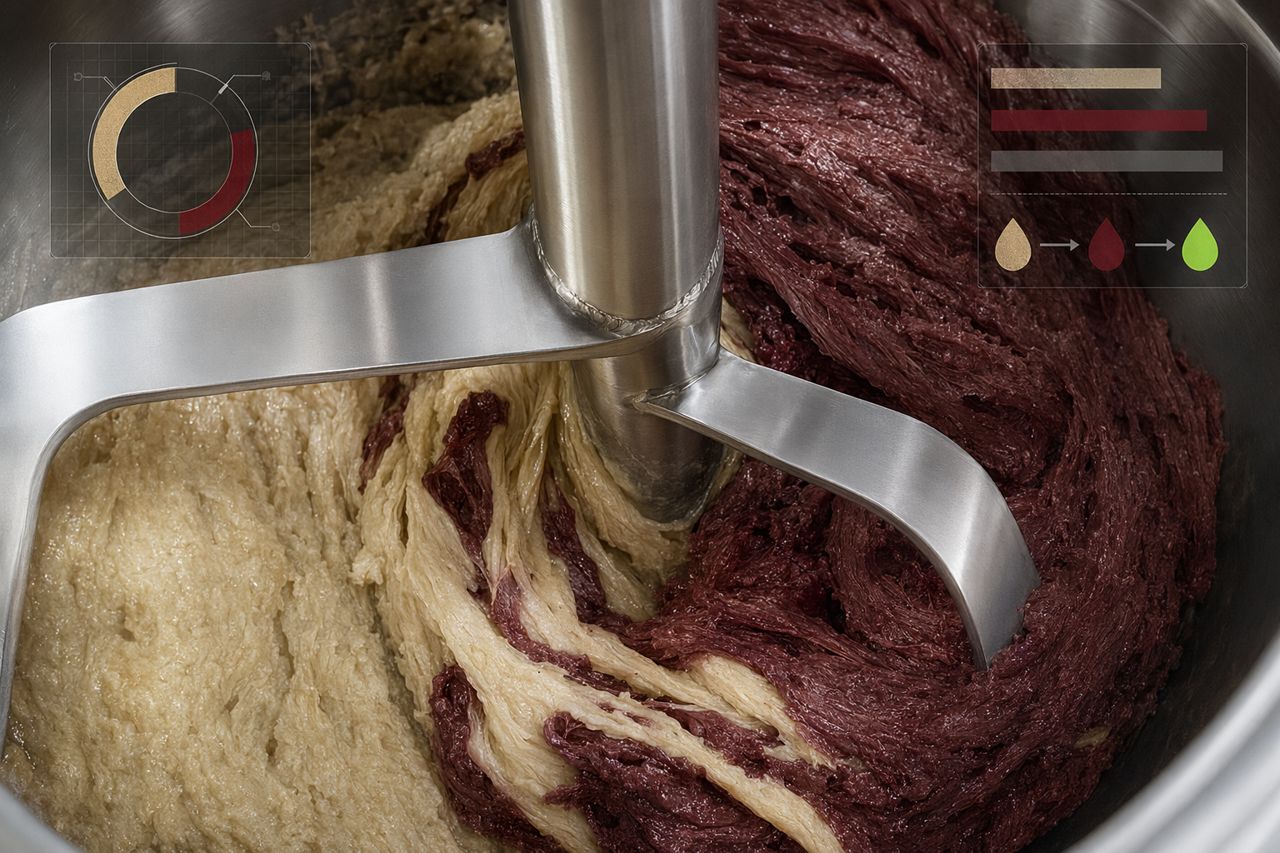
- Sticky mass in the barrel or mixer: Surface hydration imbalance, soluble protein buildup, starch/fiber interaction, or excessive viscosity before alignment.
- Crumbly finished texture: Network discontinuity, fat separation, insufficient binding between hydrated phases, or post-process moisture migration.
- Batch drift during scale-up: Heat transfer changes, residence-time variation, raw material variability, or mixing sequence effects that were hidden at bench scale.
Enzymes as a texture-control variable
Enzymes can help tune how plant proteins hydrate, interact, crosslink, soften, or release bound material during processing. The value is not simply adding an enzyme. The value is choosing the right enzyme class, addition point, contact time, deactivation strategy, and formulation context.
For pea and wheat protein systems, Enzymefusion may evaluate enzyme strategies that support:
Network formation
Certain enzyme approaches can improve interaction between protein phases, helping a mixed pea-wheat matrix hold together during forming, slicing, or cooking. This can be useful where the product has good visual fiber but poor bite integrity.
Bite modulation
When a formulation trends rubbery, dense, or overly elastic, enzyme selection can be used to adjust protein behavior so the final bite feels more controlled and less spring-loaded. This requires careful alignment with shear and heat conditions; too much modification can weaken the structure.
Hydration management
Texture defects often begin before extrusion or forming. Enzymes may help manage hydration behavior and reduce harsh transitions between dry particulates, hydrated protein, fat, and fiber. This is especially relevant when changing pea protein source, gluten quality, methylcellulose system, or fiber type.
Binding and sliceability
For plant-based deli formats, chunks, strips, grounds, and formed patties, the target is not only fiber formation. It is a matrix that holds under cutting, tumbling, marination, freezing, thawing, and cook-up. Enzyme work can be designed around those downstream stresses.
The Enzymefusion troubleshooting model
We do not start by asking, “Which enzyme can fix this?” We start by mapping the texture failure.
1. Define the failure mode
A dry chew, rubbery snap, gummy center, weak strand, and poor reheating texture may look related, but they usually have different causes. We separate appearance, bite, moisture release, cook loss, and handling performance so the enzyme brief is specific.
2. Identify the process window
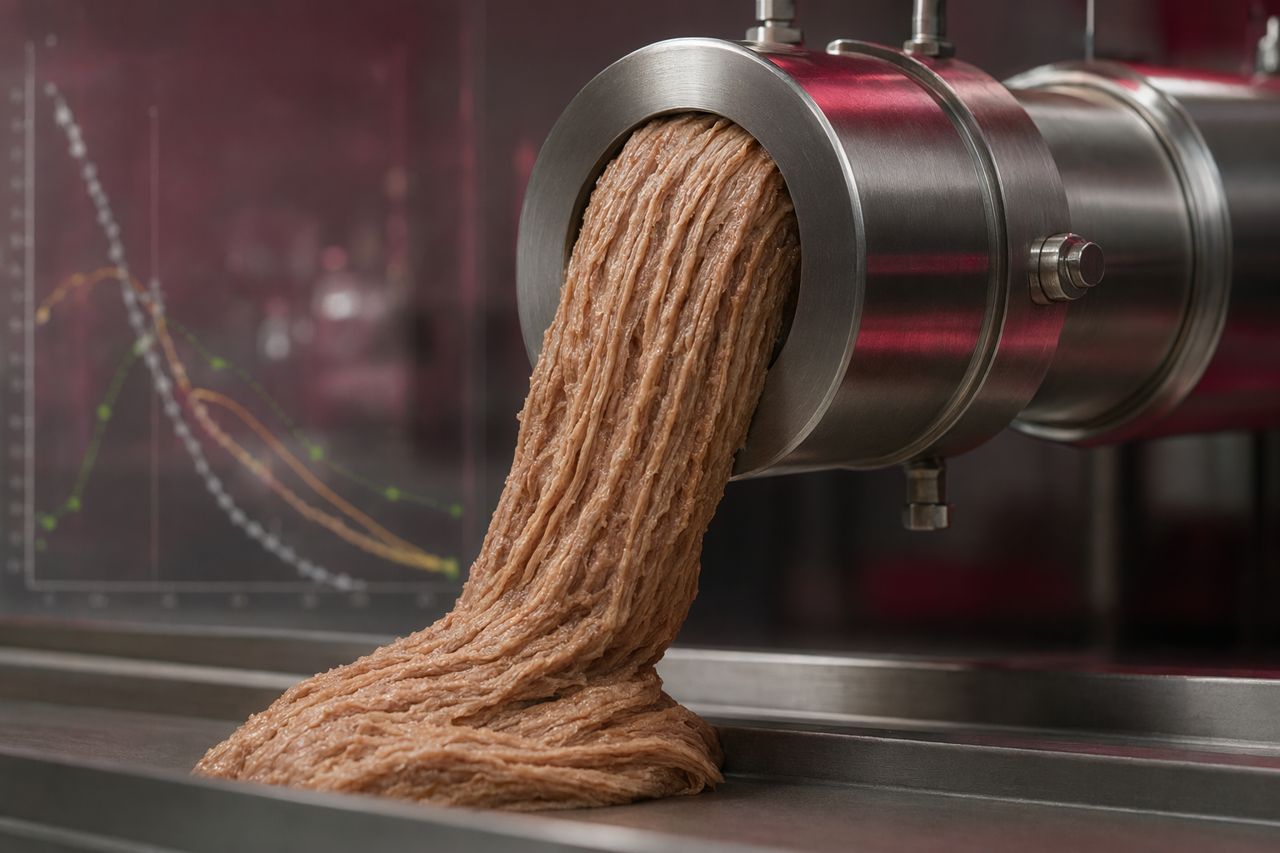
Plant-based meat texture is created under time, temperature, water, shear, and pressure constraints. An enzyme that performs in a cold bench slurry may not be useful in a high-shear process with rapid heat input. Enzymefusion evaluates practical addition points and process compatibility from the start.
3. Review the protein and binder system
Pea isolate, pea concentrate, wheat gluten, textured protein, starch, hydrocolloid, oil, emulsifier, fiber, salt, and flavor systems all affect enzyme response. We look at the total matrix, not a simplified protein-only model.
4. Build a focused trial plan
The best enzyme screen is narrow enough to teach quickly and broad enough to capture meaningful texture movement. We help define comparison sets around enzyme type, use level, addition order, hydration sequence, and thermal endpoint—without forcing a generic protocol onto your line.
5. Translate bench learning to factory behavior
A texture improvement is only valuable if it survives scale-up. We consider mixer energy, residence time, cooling profile, hold time, forming stress, freezing, packaging, and reheating instructions when interpreting trial results.
Application areas
Enzymefusion supports enzyme work across plant-based meat formats including:
- High-moisture extruded fibers and chunks
- Low-moisture textured protein systems
- Grounds, crumbles, and minced formats
- Formed patties and meatball-style products
- Strips, shreds, and diced inclusions
- Deli slices and binded composite formats
- Hybrid pea-wheat protein bases for private-label manufacturing
What a good enzyme brief should include
To move quickly, your technical request should describe the texture target and the process reality. Useful inputs include:
- Protein sources and approximate blend ratio
- Current defect: dry, rubbery, weak, sticky, crumbly, gummy, or inconsistent
- Process type: extrusion, mixing and forming, retort, cook-freeze, or chilled distribution
- Key heat and shear steps
- Fat system and fiber system
- Binder or hydrocolloid system
- Desired finished-product behavior during cooking, slicing, reheating, or freezing
- Constraints around label, allergen position, processing sequence, and cost-in-use
With that information, Enzymefusion can recommend a practical enzyme direction and quote against the intended manufacturing route.
Why Enzymefusion
Enzymefusion is a technical enzyme partner for manufacturers building plant-based meat texture at commercial scale. Our work is designed for R&D teams who need sharper formulation tools, operations teams who need process-compatible inputs, and procurement teams who need a supplier capable of supporting repeatable production.
We focus on:
- Texture outcomes rather than generic ingredient claims
- Process compatibility across mixing, extrusion, forming, cooking, and freezing
- Enzyme selection matched to protein blend and target bite
- Scale-up support for pilot and factory trials
- Clear commercial communication for quote, lead time, and documentation needs
Request a quote
If you are troubleshooting pea and wheat protein texture, tell us what is happening in your current system and what finished bite you are targeting.
Request a quote through the on-site contact form and include your product format, protein base, process type, and texture challenge. Enzymefusion will respond with a focused enzyme recommendation path for your plant-based meat manufacturing line.