Why Plant-Based Burgers Crumble After Cooking: A Factory Troubleshooting Guide
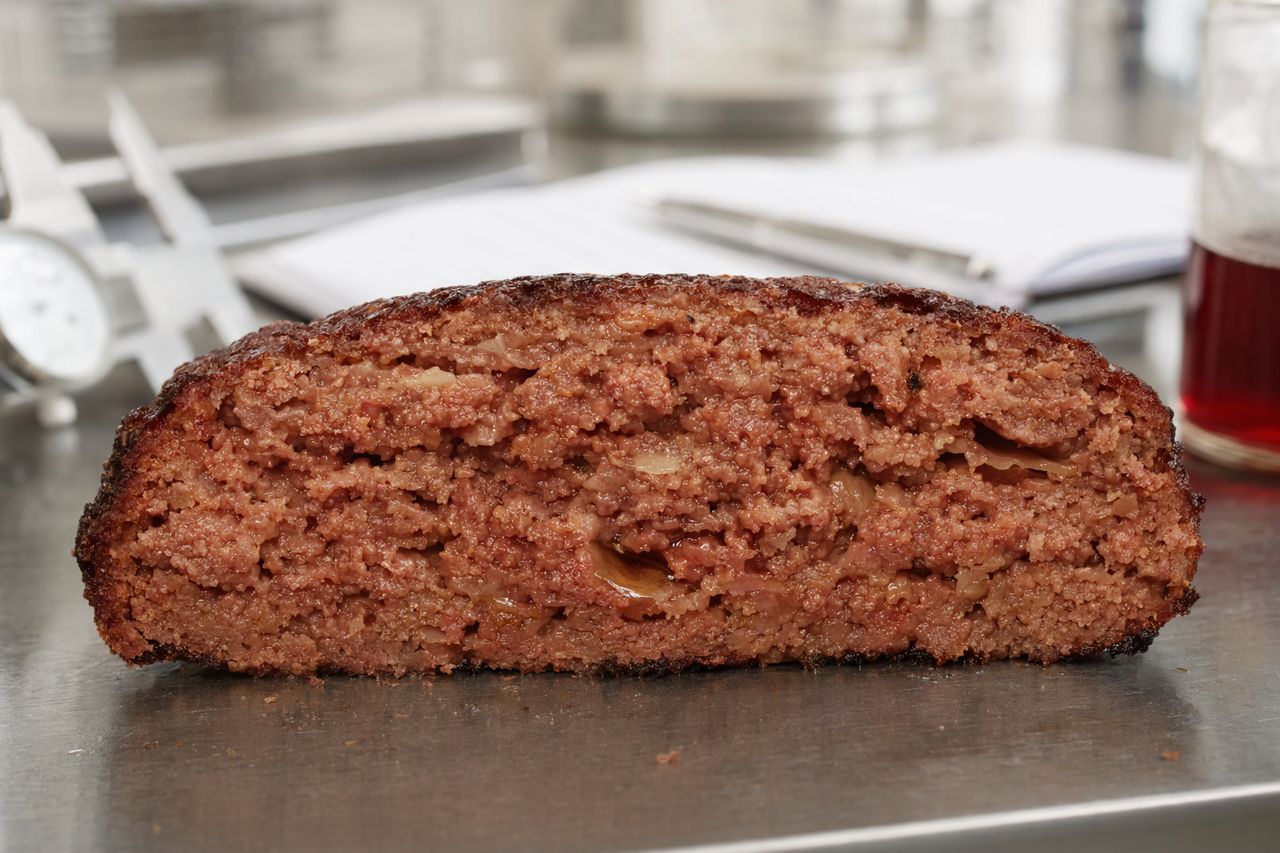
A plant-based burger can look stable at forming, pass raw handling, and still fail after the griddle. The symptom is familiar: dry edges, grainy fracture, fat pooling, weak bite, and a patty that splits instead of flexing.
For a plant-based meat factory, post-cook crumble is rarely caused by one ingredient. It is usually a system failure across hydration, protein structuring, fat retention, thermal set, and mechanical handling. Enzymes can help, but only when they are placed inside the right process window.
Enzymefusion works with manufacturers that need repeatable bite and yield at commercial scale. As an enzyme supplier for plant based meat manufacturing, we focus on formulation mechanics first: what is breaking, where it breaks, and how to rebuild the network without creating rubbery chew or processing drag.
What crumble is telling you
Post-cook crumble means the patty matrix did not maintain continuity through heat, moisture migration, fat phase change, and compression during eating.
In factory terms, the material is losing one or more of these controls:
- Protein-to-protein cohesion after hydration and shear
- Water immobilization during cooking
- Fat entrapment as fat melts and expands
- Fiber alignment through mixing, extrusion, or forming
- Thermal set timing before structural collapse begins
- Particle integration between textured protein, binder, and emulsion phases
A burger that crumbles is not simply “too dry.” It may be over-hydrated but under-bound, oily but brittle, firm in raw form but weak after heat, or cohesive in the center but friable at the edge.
The first split: raw crumble or cooked crumble?
Before reformulating, separate the failure mode.
If the patty crumbles before cooking
Look at:
- Hydration level and hydration time of textured vegetable protein
- Particle size distribution
- Mixing order
- Binder dispersion
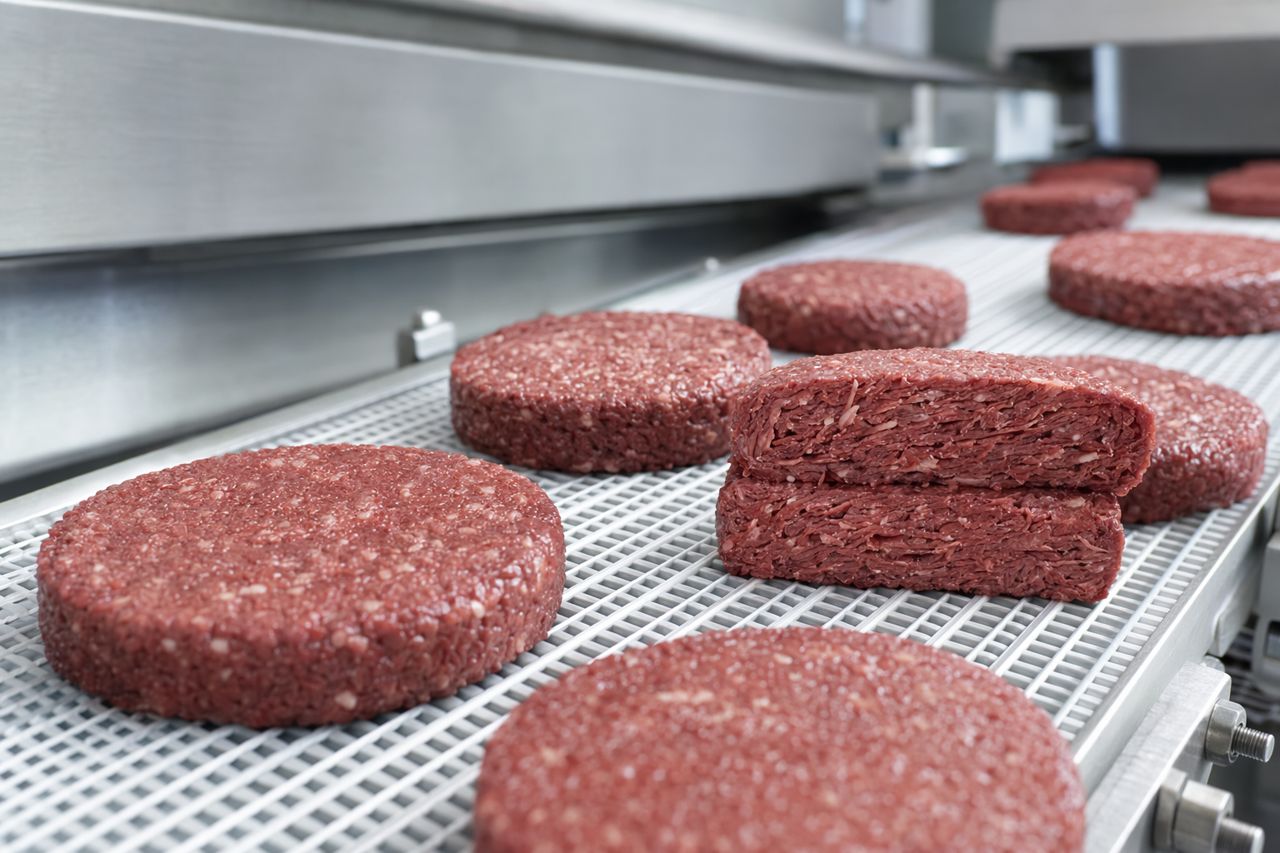
- Forming pressure
- Frozen or chilled handling temperature
This is usually a cold-structure problem.
If the patty crumbles after cooking
Look at:
- Cook loss and water release
- Fat bleed
- Protein denaturation timing
- Binder thermal behavior
- Enzyme contact time before heat
- Shear damage from mixing or pumping
- Edge drying during grill, oven, or belt cooking
This is usually a heat-transition problem.
Common factory causes of post-cook crumble
1. Hydration is present, but not structured
Plant proteins can absorb water without forming a resilient network. The mix may feel plastic during forming, then release moisture during cooking as the matrix tightens unevenly.
Factory signals include:
- Wet raw batter with dry cooked bite
- High cook loss despite adequate water addition
- Surface cracking after sear
- Grainy fracture rather than fibrous pull
Corrective direction:
- Extend or standardize pre-hydration time
- Control water temperature during hydration
- Reduce dry pockets in textured protein
- Evaluate enzyme addition where protein surfaces are accessible, not after the system is already locked
2. Fat is acting as a separator, not a retained phase
Fat creates juiciness and visual marbling, but free fat can interrupt the protein-binder network. During cooking, melted fat may open voids that become fracture points.
Factory signals include:
- Visible oil purge on the cooking surface
- Hollow pockets in cross-section
- Good raw cohesion, poor hot cohesion
- Greasy exterior with dry internal bite
Corrective direction:
- Improve fat particle size and temperature control
- Add fat after initial protein hydration where appropriate
- Avoid overmixing that smears fat into the matrix
- Build a protein-polysaccharide or protein-protein network that can tolerate phase change
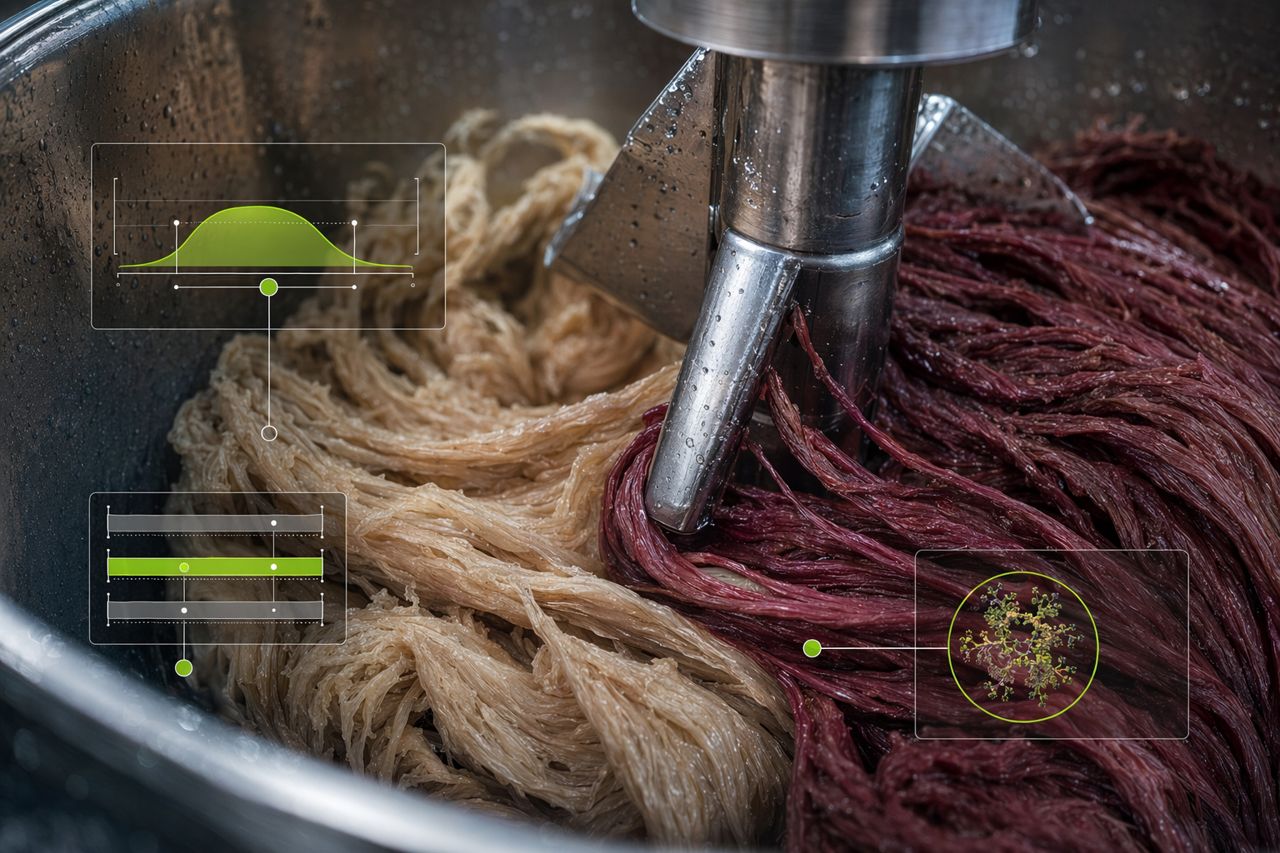
3. Shear history is damaging the network
More mixing does not always mean better binding. Excess shear can break hydrated protein pieces, smear fat, overwork hydrocolloids, or turn fibrous inclusions into short fragments.
Factory signals include:
- Batch-to-batch variation by mixer load
- Strong texture in lab bowl, weak texture after scale-up
- Increased stickiness before forming
- Short, sandy fracture after cooking
Corrective direction:
- Map mixing time, load factor, and temperature rise
- Validate ingredient order at production scale, not only benchtop
- Reduce recirculation or pump shear where possible
- Use enzymes within defined residence time rather than as a last-stage correction
4. The binder sets too late, too early, or too hard
A binder system must carry the patty through heating without making the bite pasty or elastic. If the structure sets too late, the patty collapses before cohesion develops. If it sets too early, expansion and moisture migration create cracks. If it sets too hard, the eating texture becomes rubbery.
Factory signals include:
- Edge splitting while center remains soft
- Firm exterior with crumbly interior
- Tough bite with weak slice integrity
- Inconsistent texture after cooling or reheating
Corrective direction:
- Review thermal gelation points of the binder system
- Adjust salt, pH, and water availability
- Evaluate whether enzyme-enabled crosslinking or protein modification can reduce reliance on heavy binder loading
- Measure texture after the actual customer cook path, not only after plant QC heating
5. Protein raw material variability is larger than the process window
Pea, soy, wheat, fava, chickpea, and blended protein systems do not behave identically. Even within the same protein type, lot variation in solubility, particle size, prior heat treatment, and water uptake can change cooked integrity.
Factory signals include:
- Same formula performs differently across lots
- Hydration curve shifts without recipe change
- Former pressure needs frequent adjustment
- Cooked patty breaks along textured protein boundaries
Corrective direction:
- Build incoming protein functionality checks into procurement
- Track water uptake, dispersion, and forming behavior by lot
- Create a tolerance band for enzyme and process adjustment
- Avoid assuming a lab-approved formula is robust across all protein inputs
Where enzymes fit in the troubleshooting map
Enzymes are not a universal binder. In plant-based burger systems, their value is targeted: they can modify protein interactions, support network formation, improve water and fat retention, and help create a more resilient cooked bite.
The key is selecting the right enzyme strategy for the failure mode.
For weak cooked cohesion
An enzyme approach may help increase protein network continuity, especially when hydrated protein surfaces are available and residence time is controlled before heat inactivation.
For dry, grainy fracture
Enzyme-enabled protein modification may help reduce brittle fracture by improving the way protein, water, and binder phases integrate.
For fat release and void formation
Enzymes can support a matrix that better tolerates fat melt, but they must work alongside proper fat particle control, cooling, and mixing order.
For scale-up drift
A defined enzyme process window can reduce dependence on excessive binder correction. This matters when moving from pilot batches to continuous forming, high-throughput mixing, chilled logistics, and customer cook validation.
Troubleshooting sequence for a plant-based meat factory
Use this order before making major formulation changes.
Step 1: Cut the cooked patty, not just the raw patty
Evaluate cross-sections after the actual cook method. Look for:
- Oil channels
- Dry rings
- Protein particle separation
- Edge cracking
- Center collapse
- Fibrous pull versus granular break
Step 2: Compare cook loss with fracture type
High cook loss plus crumble suggests poor water and fat retention. Low cook loss plus crumble suggests brittle network design, particle incompatibility, or over-set binder.
Step 3: Audit hydration time and water addition point
Small changes in hydration sequence can alter the entire cooked texture. Confirm whether water is reaching the protein phase or being captured too early by starches, fibers, gums, or salts.
Step 4: Review temperature during mixing and forming
Temperature controls viscosity, fat behavior, enzyme contact, binder swelling, and forming pressure. A mix that warms during production may no longer match the pilot process.
Step 5: Place enzyme addition where it can work
Enzymes need access, dispersion, and time. Adding them after fat coating, late binder thickening, or excessive shear may limit their effect. A process-native placement is more reliable than simply increasing dose.
Step 6: Validate against the commercial cook path
A patty may survive internal QC cooking and fail in customer conditions. Validate against flat-top, clamshell, oven, belt grill, frozen-to-cook, chilled-to-cook, and hold-time scenarios where relevant.
What a stronger cooked burger should deliver
For B2B development teams, the goal is not maximum firmness. It is controlled resilience.
A successful reformulation should show:
- Clean release from forming and packaging equipment
- Stable chilled or frozen handling
- Lower fracture during transport and cook
- Better moisture retention without paste-like bite
- Reduced oil purge
- Cohesive chew with visible plant-protein structure
- Repeatable performance across production lots
Process variables to document before requesting enzyme support
To shorten development time, prepare:
- Protein type, format, and supplier lot behavior
- Target protein, water, fat, and binder ranges
- Mixing order and mixing energy
- Hydration time and temperature
- Forming method and patty thickness
- Chilled or frozen storage conditions
- Cooking method and target internal temperature
- Failure photos: raw, cooked surface, and cross-section
- Texture target: tender, fibrous, firm, juicy, or slice-stable
This information helps Enzymefusion design an enzyme recommendation around the real material system, not an abstract ingredient list.
When to involve Enzymefusion
Involve us when crumble is limiting scale-up, customer approval, yield, or product consistency. We help technical teams evaluate where enzyme-enabled structure can improve cooked integrity while respecting line conditions, label strategy, ingredient interactions, and sensory targets.
If your plant-based burger is firm in the cold room but fragile on the grill, the issue is likely not one missing binder. It is a process window that needs to be engineered.
Request a quote through the on-site form and share your formulation challenge, process stage, and target texture. Enzymefusion will help identify the enzyme route that fits your plant-based meat manufacturing line.