Managing Wheat Gluten Elasticity in Vegan Sausages and Deli Slices
Wheat gluten is useful because it is elastic. It is also difficult because it is elastic.
In vegan sausage and deli slice production, that tension shows up quickly: a batter that looks structured in the mixer can rebound at stuffing, tighten during thermal set, drag at slicing, or produce a rubbery snap instead of a controlled bite. At factory scale, gluten behavior is not a single ingredient issue. It is the result of hydration order, shear, salt level, fat phase design, thermal history, hold time, and the way enzymes are used to tune the protein network.
For R&D and process teams, the goal is not maximum elasticity. The goal is engineered elasticity: enough network strength to survive filling, cooking, chilling, slicing, and packaging, without creating chew that reads as bouncy, tough, or compressed.
Enzymefusion supports manufacturers working through that window with enzyme systems built for formulation control, pilot validation, and industrial repeatability. If you are evaluating an enzyme supplier for plant based meat manufacturing, the useful question is not whether an enzyme can modify protein. It is whether the system can help you hold a target texture across the process you actually run.
Why wheat gluten becomes difficult at scale
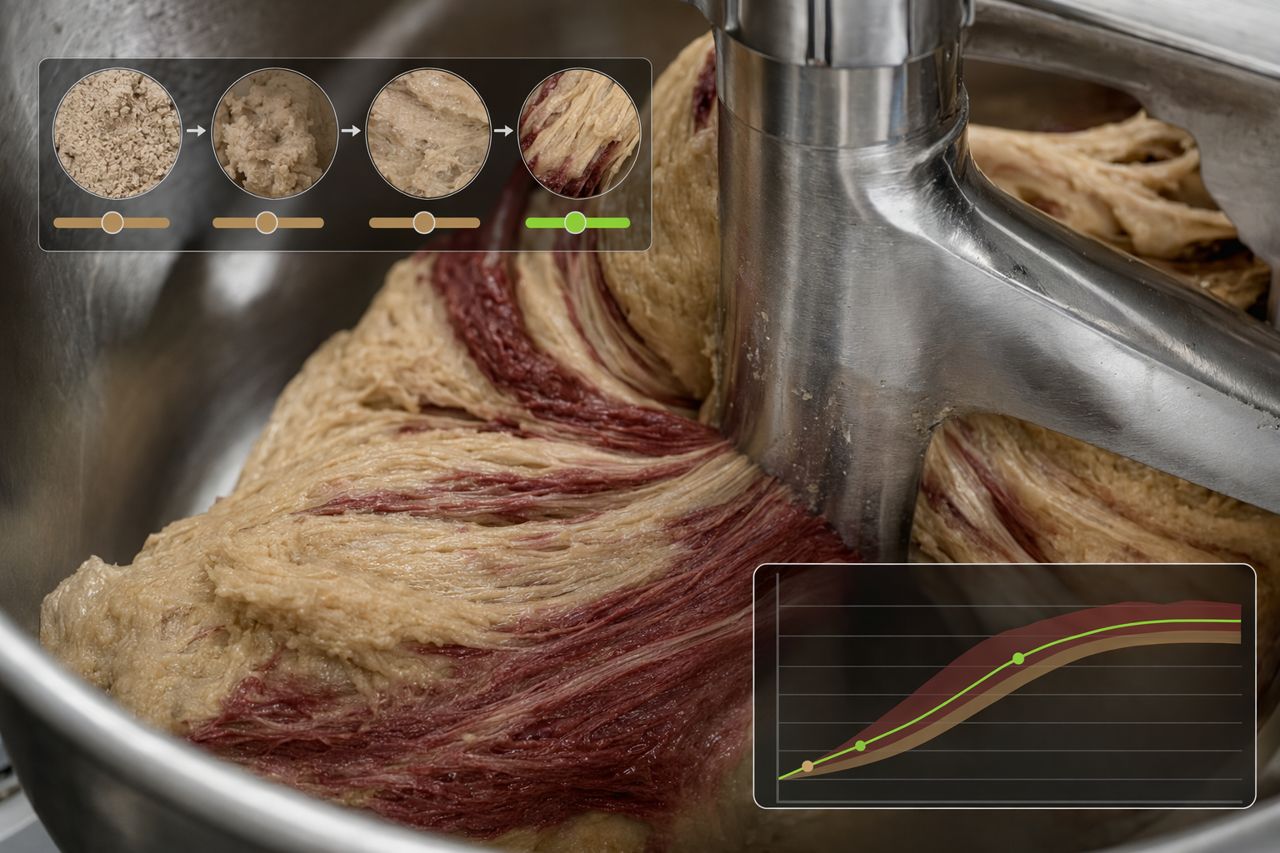
Wheat gluten brings viscoelastic structure through glutenin and gliadin fractions. In hydrated, mixed systems, it can form a cohesive network that contributes bind, chew, and resilience. That network is sensitive to process energy.
In vegan sausage and deli slice manufacturing, common scale-up problems include:
- Over-elastic bite: the finished product springs back too aggressively and feels rubbery.
- Poor slice face: deli logs deform, smear, or show tearing at the blade.
- Stuffing resistance: sausage emulsion or dough resists flow, causing inconsistent fill weights and pressure variation.
- Thermal tightening: texture appears acceptable before cook, then becomes dense after pasteurization or retort-style heat exposure.
- Batch drift: the same formula behaves differently with small changes in hydration time, mixing temperature, or protein lot.
These are not cosmetic issues. They affect throughput, giveaway, line pressure, slicing yield, packaging presentation, and product approval timelines.
Elasticity is a process variable, not just a formula variable
A gluten-containing plant meat system can shift dramatically depending on when water, oil, salts, acids, fibers, and protein fractions are introduced.
Hydration sequence
Gluten that hydrates too early under aggressive shear can develop a strong network before the fat phase is fully distributed. Gluten that hydrates too late may form weak, uneven domains that do not bind consistently through cook and chill.
Practical development questions include:
- Is gluten being hydrated before or after high-oil ingredients enter the mixer?
- Is salt accelerating structure before the protein phase is evenly dispersed?
- Are dry powders pre-blended sufficiently to avoid localized elastic clumps?
- Is hold time allowing the dough to tighten before forming or stuffing?
Shear profile
High shear can align and strengthen protein networks, but it can also overwork gluten. In sausage systems, this may present as excessive stuffing pressure. In deli logs, it may create a dense, springy gel that slices cleanly but eats too firm.
The ideal shear profile depends on the target: coarse sausage bite, emulsified hot-dog style texture, folded deli slice, or whole-muscle-inspired slab.
Thermal set
Gluten responds to heat alongside other structuring agents. If the formulation includes starches, hydrocolloids, methylcellulose, pea protein, soy protein, or fibers, the final texture reflects the timing of multiple transitions. A gluten network that feels moderate before cook can tighten after thermal treatment and become resistant at chilled slicing temperature.
Where enzymes fit into gluten texture control
Enzymes are not a shortcut around formulation discipline. They are a control layer.
Used correctly, enzyme systems can help manufacturers adjust gluten functionality without rebuilding the entire label or process. Depending on the product architecture, the enzyme strategy may be designed to:
- reduce excessive elastic rebound,
- improve cohesion between gluten and other plant proteins,
- support cleaner slicing after chill,
- increase tolerance to mixing and hold time,
- improve bite consistency across protein lots,
- reduce brittleness or tearing in deli formats,
- help balance bind and tenderness in sausage systems.
The important part is matching enzyme selection to the actual failure mode. A product that is too rubbery does not need the same approach as a product that crumbles at slicing. A stuffed sausage with high line pressure is not the same challenge as a deli log with a dry fracture line.
Designing for vegan sausage bite
Sausage formats usually need controlled resilience. The matrix must flow under stuffing pressure, hold shape through cook, and deliver bite without collapsing into paste.
For gluten-forward vegan sausages, watch three zones.
1. Pre-stuffing rheology
If the batter becomes elastic too early, line pressure rises and fill weight control suffers. Enzyme treatment may be used to adjust the rate of network development so the material remains processable during the forming window.
2. Cooked snap versus rubber band effect
A desirable casing bite can be confused with internal rubberiness. When gluten dominates the internal network, the product may snap but then chew long. Enzyme systems can help shift the texture from rebound-driven elasticity toward a shorter, more savory bite.
3. Fat and moisture release
A network that is too tight can squeeze moisture or destabilize fat distribution during heat. A network that is too weak can weep or fracture. The target is a matrix that binds without becoming compact.
Designing for deli slice performance
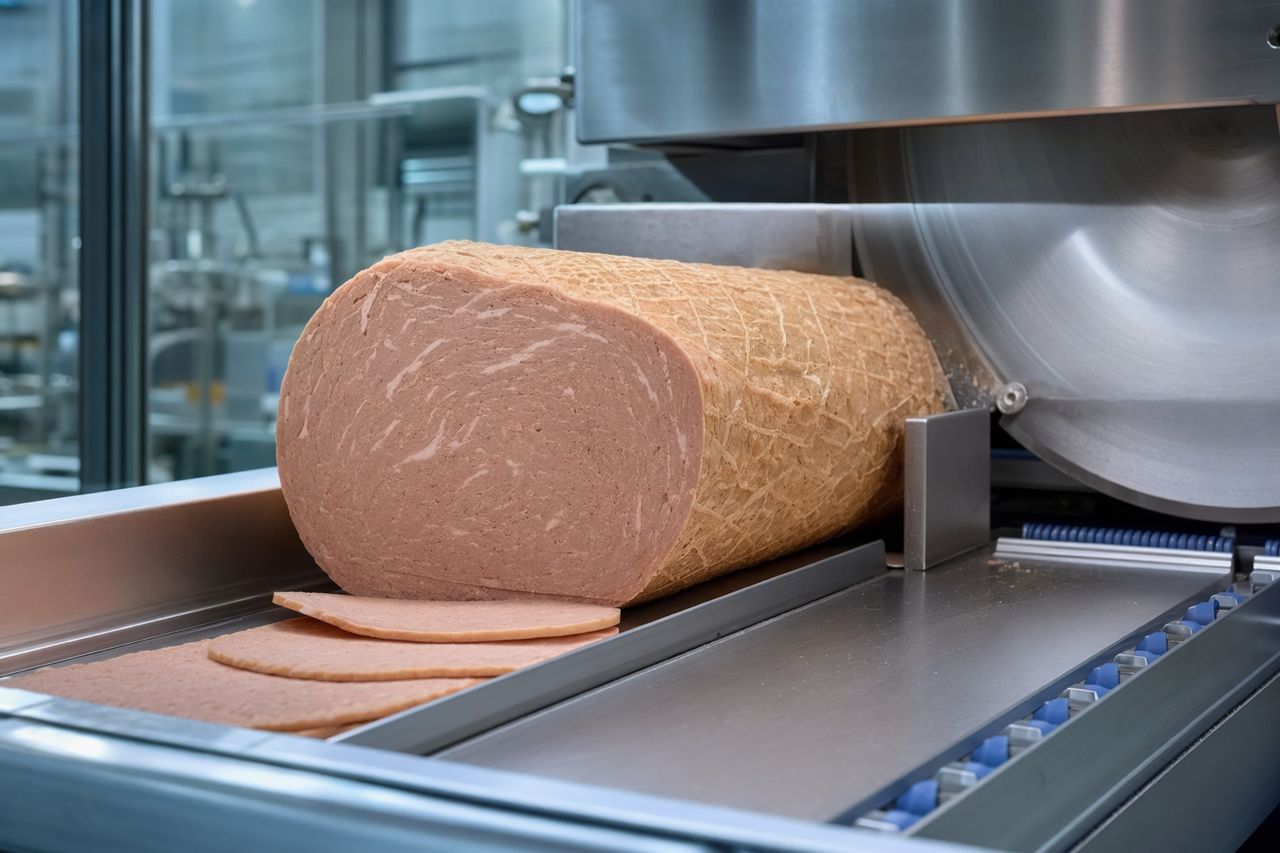
Deli formats place different stress on gluten. The product must form a log or slab, survive cooling, and pass through high-speed slicing without edge tearing, compression, or blade drag.
Key development targets include:
- Slice integrity: clean separation without crumbling.
- Flexible handling: slices bend without cracking.
- Controlled surface tack: enough cohesion for stacking, not enough to smear.
- Chilled texture stability: no excessive tightening after overnight hold.
In deli slices, enzymes may be used to refine network cohesion and reduce the difference between center and edge texture. This is especially relevant where thermal gradients or cooling rates create non-uniform firmness.
Practical evaluation plan for R&D teams
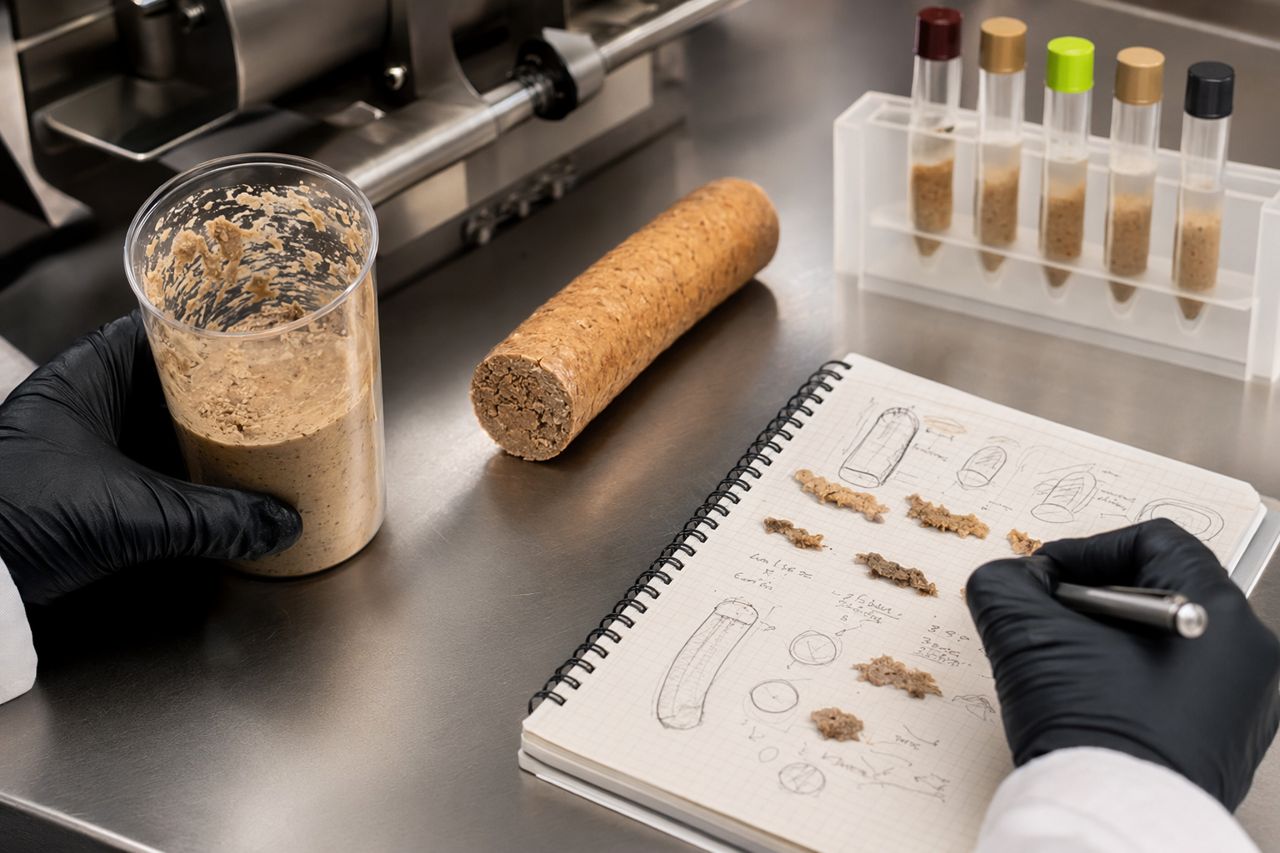
A useful gluten elasticity trial should be built around factory realities, not only bench impressions.
Define the defect in operational terms
Instead of writing “too chewy,” define the problem as:
- stuffing pressure exceeds target range,
- slice edge tears above acceptable reject level,
- product rebounds after forming and loses dimensional control,
- chilled bite is firmer than sensory target,
- cooked yield is acceptable but texture is too dense.
This makes enzyme screening faster and more defensible.
Keep the base process stable
When screening enzyme options, avoid changing too many variables at once. Lock the protein ratio, hydration sequence, salt level, thermal program, and mixing profile wherever possible. Then test enzyme placement, contact time, and process timing inside realistic production windows.
Measure the window, not only the best point
A plant-based meat factory needs tolerance. The best trial condition is less valuable if it only works under narrow timing. Strong candidates should maintain texture when hold time, filling delay, or thermal ramp shifts within normal plant variation.
Confirm after chill and slice
Gluten systems often continue to reveal their behavior after cooling. Evaluate texture after the same chill time, slicing temperature, and packaging delay used in production. For deli products, the slice face is often more informative than the hot product.
Common formulation interactions
Gluten rarely acts alone. Enzyme performance and texture outcome can be influenced by the full matrix.
Pea and soy proteins
These proteins can dilute, compete with, or reinforce gluten networks depending on hydration and heat treatment. Enzyme strategy should consider whether the target is gluten moderation, cross-network cohesion, or improved compatibility between protein phases.
Fibers and starches
Fibers can interrupt elastic continuity or absorb water needed for gluten development. Starches can add firmness during heat but may also mask or exaggerate gluten rebound after chill. Water allocation matters.
Oils and fat analogs
Fat distribution changes perception of bite. A well-structured gluten network can still feel dry or tight if the fat phase is poorly stabilized. Enzyme work should be paired with a review of emulsification and particle size.
Salt, acids, and flavors
Savory systems carry functional ingredients that are not texture-neutral. Salt can strengthen protein interactions. Acidic components may alter hydration behavior. Flavor bases can introduce minerals, reducing sugars, or carriers that shift process response.
What Enzymefusion brings to the development table
Enzymefusion works with plant-based meat manufacturers on enzyme selection, application logic, and scale-up translation. We focus on the texture target and process constraint first, then build the enzyme recommendation around the manufacturing reality.
That means looking at:
- formula architecture,
- protein source variability,
- hydration and mixing sequence,
- forming or stuffing conditions,
- thermal profile,
- chill and slicing parameters,
- packaging and hold requirements.
The outcome is not a generic enzyme addition. It is a defined process recommendation for a specific product format.
Request a quote for your gluten texture project
If wheat gluten is giving you too much rebound, not enough slice integrity, or a narrow process window, Enzymefusion can help evaluate the right enzyme approach for your vegan sausage or deli slice line.
Request a quote and share your product format, target texture, current process, and the defect you are trying to solve. Our team will respond with a practical next step for formulation and pilot evaluation.